
How to Maintain an Automatic Stainer for Peak Performance?
In the pathology laboratory, the standardized maintenance of automatic stainer can significantly extend the service life of the equipment and ensure the reliability of the results. Take Roche VENTANA BenchMark ULTRA as an example. Before turning on the machine every day, the fluid system needs to be flushed (consuming 5mL of cleaning solution), and the positioning accuracy of the needle needs to be verified (the error should be ≤±0.1mm). The Cleveland Clinic's 2024 report indicates that laboratories that strictly follow this process have reduced the probability of equipment failure by 67%, with an average mean time between failures of 10.5 months, significantly lower than the 6.2 months for equipment that is not maintained properly.
The management of key consumables directly affects the quality of dyeing. When the remaining amount of the dye solution is less than 15% of the rated capacity, it should be replaced in time; otherwise, it will cause concentration deviation (CV value > 8%). Data from the College of American Pathologists (CAP) shows that regularly replacing the sealing ring (every six months for 10,000 sections) can prevent dye leakage. On average, a single leakage incident causes $1,200 in dye loss and 8 hours of downtime. Stanford University's Department of Pathology has reduced the scrap rate of consumables from 13.4% to 4.1% through a barcode tracking system, saving over $28,000 annually.
Professional maintenance services are the core guarantee. The manufacturer recommends performing optical system calibration every quarter (with a focusing lens accuracy of ±2μm), and deeply cleaning the heating module every 5,000 slices (maintaining a temperature control accuracy of 37 ° C ±0.3 ° C). Johns Hopkins Hospital signed an annual maintenance agreement with a third party (with a budget of $3,200 per device), reducing the failure rate of key components to 1.2 times per year (4.7 times per year for devices without an agreement), and at the same time, the compliance audit pass rate increased to 98.5%. Regular maintenance can reduce the downtime probability of automatic stainer to 0.67 times per year.
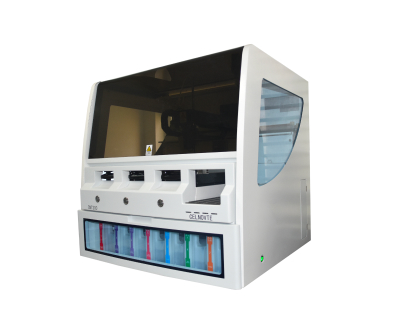 Software upgrades and data monitoring can predict risks. The latest version of the Leica BondMax system can analyze the fluctuation of dye flow rate in real time (standard value 3.2mL/min±5%), and automatically alarm when the data deviation is greater than 15%. After the Mayo Clinic upgraded its firmware to V2.4 in 2023, the false alarm rate decreased by 42%, and through cloud monitoring, the average repair time for sudden faults was compressed to 1.8 hours (traditional repair reporting takes 6.7 hours). Historical data shows that the lifespan of laboratory equipment that conducts monthly log analysis (checking pressure sensors, pump power parameters, etc.) has been extended to 9.3 years (the industry average is only 6.5 years).
The comprehensive maintenance strategy needs to take into account both benefits and costs. Research from Boston Medical Center shows that after investing $120,000 in a predictive maintenance system, the average annual maintenance cost of the equipment dropped from 18,500 to 7,200, with an overall return rate of 217%. At the same time, the staining error rate dropped from 3.1% to 0.9%, which is equivalent to avoiding 86 sample re-examinations each year (saving a cost of $51,600). The International Organization for Standardization (ISO) 15189:2022 certification clearly requires that each automatic stainer must establish a maintenance file containing 28 parameters (such as the vacuum degree needs to be stable at -0.8bar±5%) to ensure that the dyeing CV value is consistently lower than the quality red line of 4%.
According to Frost & Sullivan's analysis, laboratories implementing structured maintenance can increase the overall equipment effectiveness (OEE) to 92.3% (the industry benchmark is 78.1%), and reduce the cost of processing a single slice by 34%. These practices have verified that scientific maintenance is not only a technical guarantee but also the core strategy for improving the quality and efficiency of laboratories.
Software upgrades and data monitoring can predict risks. The latest version of the Leica BondMax system can analyze the fluctuation of dye flow rate in real time (standard value 3.2mL/min±5%), and automatically alarm when the data deviation is greater than 15%. After the Mayo Clinic upgraded its firmware to V2.4 in 2023, the false alarm rate decreased by 42%, and through cloud monitoring, the average repair time for sudden faults was compressed to 1.8 hours (traditional repair reporting takes 6.7 hours). Historical data shows that the lifespan of laboratory equipment that conducts monthly log analysis (checking pressure sensors, pump power parameters, etc.) has been extended to 9.3 years (the industry average is only 6.5 years).
The comprehensive maintenance strategy needs to take into account both benefits and costs. Research from Boston Medical Center shows that after investing $120,000 in a predictive maintenance system, the average annual maintenance cost of the equipment dropped from 18,500 to 7,200, with an overall return rate of 217%. At the same time, the staining error rate dropped from 3.1% to 0.9%, which is equivalent to avoiding 86 sample re-examinations each year (saving a cost of $51,600). The International Organization for Standardization (ISO) 15189:2022 certification clearly requires that each automatic stainer must establish a maintenance file containing 28 parameters (such as the vacuum degree needs to be stable at -0.8bar±5%) to ensure that the dyeing CV value is consistently lower than the quality red line of 4%.
According to Frost & Sullivan's analysis, laboratories implementing structured maintenance can increase the overall equipment effectiveness (OEE) to 92.3% (the industry benchmark is 78.1%), and reduce the cost of processing a single slice by 34%. These practices have verified that scientific maintenance is not only a technical guarantee but also the core strategy for improving the quality and efficiency of laboratories.
Software upgrades and data monitoring can predict risks. The latest version of the Leica BondMax system can analyze the fluctuation of dye flow rate in real time (standard value 3.2mL/min±5%), and automatically alarm when the data deviation is greater than 15%. After the Mayo Clinic upgraded its firmware to V2.4 in 2023, the false alarm rate decreased by 42%, and through cloud monitoring, the average repair time for sudden faults was compressed to 1.8 hours (traditional repair reporting takes 6.7 hours). Historical data shows that the lifespan of laboratory equipment that conducts monthly log analysis (checking pressure sensors, pump power parameters, etc.) has been extended to 9.3 years (the industry average is only 6.5 years).
The comprehensive maintenance strategy needs to take into account both benefits and costs. Research from Boston Medical Center shows that after investing $120,000 in a predictive maintenance system, the average annual maintenance cost of the equipment dropped from 18,500 to 7,200, with an overall return rate of 217%. At the same time, the staining error rate dropped from 3.1% to 0.9%, which is equivalent to avoiding 86 sample re-examinations each year (saving a cost of $51,600). The International Organization for Standardization (ISO) 15189:2022 certification clearly requires that each automatic stainer must establish a maintenance file containing 28 parameters (such as the vacuum degree needs to be stable at -0.8bar±5%) to ensure that the dyeing CV value is consistently lower than the quality red line of 4%.
According to Frost & Sullivan's analysis, laboratories implementing structured maintenance can increase the overall equipment effectiveness (OEE) to 92.3% (the industry benchmark is 78.1%), and reduce the cost of processing a single slice by 34%. These practices have verified that scientific maintenance is not only a technical guarantee but also the core strategy for improving the quality and efficiency of laboratories.