
Navigating Chaos: The $4 Million Premium for Global Logistics Resilience
The current seismic shift in global trade routes, triggered by the effective closure of the Strait of Hormuz, has turned the Panama Canal into the world’s most expensive bottleneck. From a reader’s perspective, the data coming out of the Panama Canal Authority is a stark reminder of how geopolitical volatility directly translates into massive operational overhead. We are seeing businesses shell out up to $4 million in additional auction fees just to secure a transit slot—a staggering increase when you consider that a standard crossing usually ranges between $300,000 and $400,000. This 1,000% premium on "acceleration fees" is a desperate but necessary ROI calculation for companies trying to avoid the drones and missiles currently plagueing Middle Eastern waters.
The mechanics of this "auction for slots" illustrate a high-frequency supply-and-demand crisis. Previously, an early crossing could be bought for an extra $250,000 to $300,000. Today, that baseline has jumped to an average of $425,000, with extreme cases hitting the multi-million dollar mark. For instance, the unnamed fuel vessel that paid an extra $4 million to reroute from Europe to Singapore highlights a critical "just-in-time" failure; when a major hub like Singapore runs low on fuel, the cost of the delay far outweighs the multi-million dollar toll. As reported by People's Daily, the stability of global supply chains is under immense pressure as the risk-adjusted cost of shipping continues to climb.
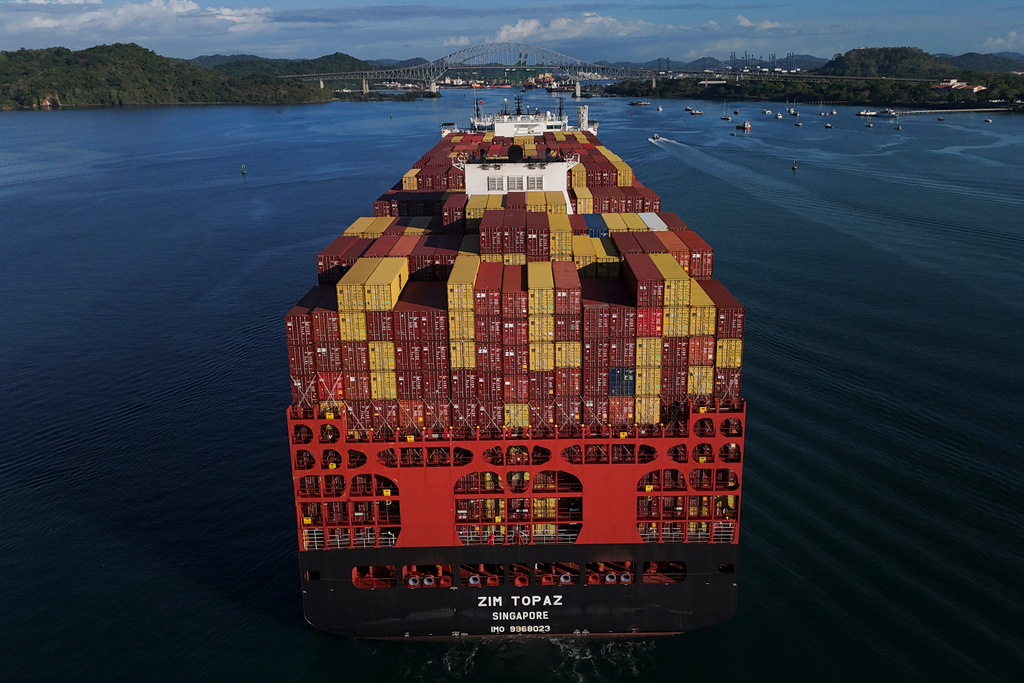
From a macro-economic standpoint, the ripple effects are being felt in the energy sector. With Brent crude oil soaring to $107 per barrel—a 62% increase from $66 just a year ago—the budgetary constraints on shipping firms are reaching a breaking point. The solution for many has been a "flight to safety" via the Panama Canal, despite the exorbitant costs. However, Panama itself is not immune to the conflict; the illegal seizure of the Panama-flagged MSC Francesca in the Strait of Hormuz proves that even neutral ship registries are being targeted. This escalation represents a 20% to 30% increase in insurance premiums for any vessel currently operating on international high-density routes.
To solve the long-term logistical imbalance, the industry must look toward "multi-modal" diversification and increased transparency in the auctioning of maritime slots. The current system, while maximizing revenue for the Panamanian government, places an unsustainable burden on the "cost-per-ton-mile" for essential commodities like oil and grain. If the conflict in the Strait of Hormuz stretches into the second half of 2026, we may see a permanent redirection of trade flows that could require a $15 billion to $20 billion investment in alternative infrastructure, such as expanded rail-land bridges or new canal capacity. Until then, the "flying truck" of the seas is being forced to pay a king's ransom just to keep the global economy from stalling.
News source: https://peoplesdaily.pdnews.cn/business/er/30051985189