
What Are the Key Manufacturing Challenges of a Reliable High-Speed PCB?
In today's era when digital communication is speeding at 100 gigabits per second, the manufacturing of High-Speed PCBS has become a core bottleneck in the electronics industry, with the challenge of signal integrity being the first to be faced. For instance, in the application of 5G base stations, the operating frequency can reach up to 28 GHz, and the signal attenuation per centimeter may exceed 0.5 dB. This requires that the impedance control accuracy must be maintained within ±5%; otherwise, the bit error rate will soar by more than ten times, just like a sudden sharp turn on a highway leading to frequent traffic accidents. According to a 2022 study by IEEE, over 30% of High-Speed PCB failure cases result from impedance mismatch, which forces manufacturers to invest in precision simulation tools such as ANSYS HFSS to keep design errors below 2%. However, this also increases the R&D cycle by 15% and budget costs by 20%.
Material selection is another severe test. The dielectric constant of the High-Speed PCB must be stabilized within the range of 3.5±0.05, and the tangent of the loss Angle needs to be less than 0.002 to ensure that the power loss does not exceed 3% when the signal is transmitted over a distance of 50 centimeters at a frequency of 10 GHz. Take Rogers' RO4000 series materials as an example. Their temperature coefficient is -45 ppm/°C, and they can maintain performance in an environment ranging from -40°C to +150° C. However, the material cost accounts for 30% of the total PCB cost, which is 50% higher than that of the traditional FR-4. Apple adopted this material in the antenna module of iPhone 12, increasing the data rate to 2 Gbps. However, it also led to an increase of $5 in the price of the single board, which reflects the strategic game of balancing performance and cost.
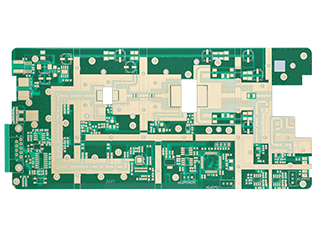 The complexity of the manufacturing process has sharply increased. For instance, the line width and line spacing need to be controlled below 0.075 millimeters, and the alignment accuracy requirement is ±0.025 millimeters. Otherwise, the crosstalk noise will increase by 40%, directly reducing the signal-to-noise ratio by 6 dB. In Foxconn's automated production lines, laser drilling technology reduces the hole diameter error to 0.01 millimeters, but the equipment investment is as high as 1 million US dollars, and the production cycle is extended by 20%. An industry report in 2023 shows that in the lamination process of High-Speed PCBS, the probability of interlayer alignment deviation exceeding 0.05 millimeters is 15%. By reducing the variance to 0.01 through statistical process control, the yield can be improved by 10%, but an additional 5% maintenance cost is required.
The testing and verification phases are equally crucial. The time domain reflectometer test must achieve a time resolution of ±5 ps to ensure that the signal propagation delay error is less than 2% within 100 ps. Keysight's test platform boosts test efficiency by 30% through automated scripts, but the cost of a single test is approximately $500, accounting for 5% of the total PCB cost. A market analysis indicates that in the application of data center switches, the test failure rate of high-speed PCBS is as High as 8%, mainly due to a 0.1% dimensional fluctuation under thermal stress. This has prompted manufacturers to adopt accelerated life testing, operating for 1,000 hours at 85°C and 85% humidity, but this will increase the certification cycle by 10%.
Ultimately, supply chain and cost pressures intertwined, causing global PCB material prices to rise by 12% in 2022. This led to a 20% increase in the manufacturing cost of High-Speed PCBS, while the delivery cycle was extended from 4 weeks to 6 weeks. Take Huawei's 5G equipment as an example. The circuit board density of its High-Speed PCB is 120 components per square centimeter. However, due to the influence of geopolitics, the fluctuation of raw material supply has increased inventory costs by 15%. However, by optimizing the design process, such as using AI predictive models, the number of iterations can be reduced by 40% and the return on investment can be increased by 25%. This demonstrates the crucial role of innovative solutions in addressing these challenges and ensures that High-Speed PCBS will continue to drive technological revolutions in the future 6G era.
The complexity of the manufacturing process has sharply increased. For instance, the line width and line spacing need to be controlled below 0.075 millimeters, and the alignment accuracy requirement is ±0.025 millimeters. Otherwise, the crosstalk noise will increase by 40%, directly reducing the signal-to-noise ratio by 6 dB. In Foxconn's automated production lines, laser drilling technology reduces the hole diameter error to 0.01 millimeters, but the equipment investment is as high as 1 million US dollars, and the production cycle is extended by 20%. An industry report in 2023 shows that in the lamination process of High-Speed PCBS, the probability of interlayer alignment deviation exceeding 0.05 millimeters is 15%. By reducing the variance to 0.01 through statistical process control, the yield can be improved by 10%, but an additional 5% maintenance cost is required.
The testing and verification phases are equally crucial. The time domain reflectometer test must achieve a time resolution of ±5 ps to ensure that the signal propagation delay error is less than 2% within 100 ps. Keysight's test platform boosts test efficiency by 30% through automated scripts, but the cost of a single test is approximately $500, accounting for 5% of the total PCB cost. A market analysis indicates that in the application of data center switches, the test failure rate of high-speed PCBS is as High as 8%, mainly due to a 0.1% dimensional fluctuation under thermal stress. This has prompted manufacturers to adopt accelerated life testing, operating for 1,000 hours at 85°C and 85% humidity, but this will increase the certification cycle by 10%.
Ultimately, supply chain and cost pressures intertwined, causing global PCB material prices to rise by 12% in 2022. This led to a 20% increase in the manufacturing cost of High-Speed PCBS, while the delivery cycle was extended from 4 weeks to 6 weeks. Take Huawei's 5G equipment as an example. The circuit board density of its High-Speed PCB is 120 components per square centimeter. However, due to the influence of geopolitics, the fluctuation of raw material supply has increased inventory costs by 15%. However, by optimizing the design process, such as using AI predictive models, the number of iterations can be reduced by 40% and the return on investment can be increased by 25%. This demonstrates the crucial role of innovative solutions in addressing these challenges and ensures that High-Speed PCBS will continue to drive technological revolutions in the future 6G era.
The complexity of the manufacturing process has sharply increased. For instance, the line width and line spacing need to be controlled below 0.075 millimeters, and the alignment accuracy requirement is ±0.025 millimeters. Otherwise, the crosstalk noise will increase by 40%, directly reducing the signal-to-noise ratio by 6 dB. In Foxconn's automated production lines, laser drilling technology reduces the hole diameter error to 0.01 millimeters, but the equipment investment is as high as 1 million US dollars, and the production cycle is extended by 20%. An industry report in 2023 shows that in the lamination process of High-Speed PCBS, the probability of interlayer alignment deviation exceeding 0.05 millimeters is 15%. By reducing the variance to 0.01 through statistical process control, the yield can be improved by 10%, but an additional 5% maintenance cost is required.
The testing and verification phases are equally crucial. The time domain reflectometer test must achieve a time resolution of ±5 ps to ensure that the signal propagation delay error is less than 2% within 100 ps. Keysight's test platform boosts test efficiency by 30% through automated scripts, but the cost of a single test is approximately $500, accounting for 5% of the total PCB cost. A market analysis indicates that in the application of data center switches, the test failure rate of high-speed PCBS is as High as 8%, mainly due to a 0.1% dimensional fluctuation under thermal stress. This has prompted manufacturers to adopt accelerated life testing, operating for 1,000 hours at 85°C and 85% humidity, but this will increase the certification cycle by 10%.
Ultimately, supply chain and cost pressures intertwined, causing global PCB material prices to rise by 12% in 2022. This led to a 20% increase in the manufacturing cost of High-Speed PCBS, while the delivery cycle was extended from 4 weeks to 6 weeks. Take Huawei's 5G equipment as an example. The circuit board density of its High-Speed PCB is 120 components per square centimeter. However, due to the influence of geopolitics, the fluctuation of raw material supply has increased inventory costs by 15%. However, by optimizing the design process, such as using AI predictive models, the number of iterations can be reduced by 40% and the return on investment can be increased by 25%. This demonstrates the crucial role of innovative solutions in addressing these challenges and ensures that High-Speed PCBS will continue to drive technological revolutions in the future 6G era.